Showing posts with label Harry Potter. Show all posts

Tuesday, December 6, 2011

National Board of Review Winners

The oldest film awards body in the world - a spin-off of the censorship board - announces their classy set of nominees and winners for 2011.


Best Picture Top 10
The Artist
The Descendants
Drive
The Girl with the Dragon Tattoo
Harry Potter and the Deathly Hallows: Part 2
Hugo 
The Ides of March
J Edgar
The Tree of Life
War Horse

Best Director
Martin Scorsese - Hugo

Best Actor
George Clooney - The Descendants

Best Actress
Tilda Swinton - We Need to Talk About Kevin

Best Supporting Actor
Christopher Plummer - Beginners

Best Supporting Actress
Shailene Woodley - The Descendants

Best Animated Feature
Rango

Best Ensemble
The Help

Best Independent Films
50/50
Another Earth
Beginners
A Better Life
Cedar Rapids
Margin Call
Shame
Take Shelter
We Need to Talk About Kevin
Win Win


Screenplay, Foreign Language Film, Documentary & Breakthrough Awards after the cut:

Sunday, September 4, 2011

Harry Potter and the Deathly Hallows, Part 2 - Review


Deathly Hallows Part 2 picks up right where Part 1 left off, obviously, but although it maintains the slick  production and gets into the really interesting parts of the plot, it still seems somehow incomplete. Naturally this makes sense, as it is one movie in two parts, but while the two halves are crafted to stand well independently, the momentum of the full story feels interrupted. Where Part 1 felt somehow light on plot (despite being full of incident), Part 2 seems to pick up right in the middle of stakes being heightened. But once it gets going, it is a satisfying conclusion to the 10 year series.

The momentum quickly picks up with the plan to break into goblin-guarded Gringotts Bank to find the Horcrux hidden in Bellatrix Lestrange's vault, and the entire sequence inside Gringotts, with its Indiana Jonesey tunnels, caves and rollercoaster cart tracks, is great fun. After that, the film mainly builds up to the epic climax, with Hogwarts fully under siege, and under control of the ambiguously loyal Severus Snape. We briefly get to see Maggie Smith's Professor McGonagall in action and, while the Professors do their bit, its the students who pick up swords and wands to protect Hogwarts - often to death. A bold move on Rowling's part. Beyond the main trio of Harry, Ron & Hermione, it is refreshing to see a troop of young, unknown British actors take on the high stakes epic of battle. Matthew Lewis, in particular, impresses as previously awkward & clumsy Neville Longbottom, coming into his own as a Hogwarts hero.

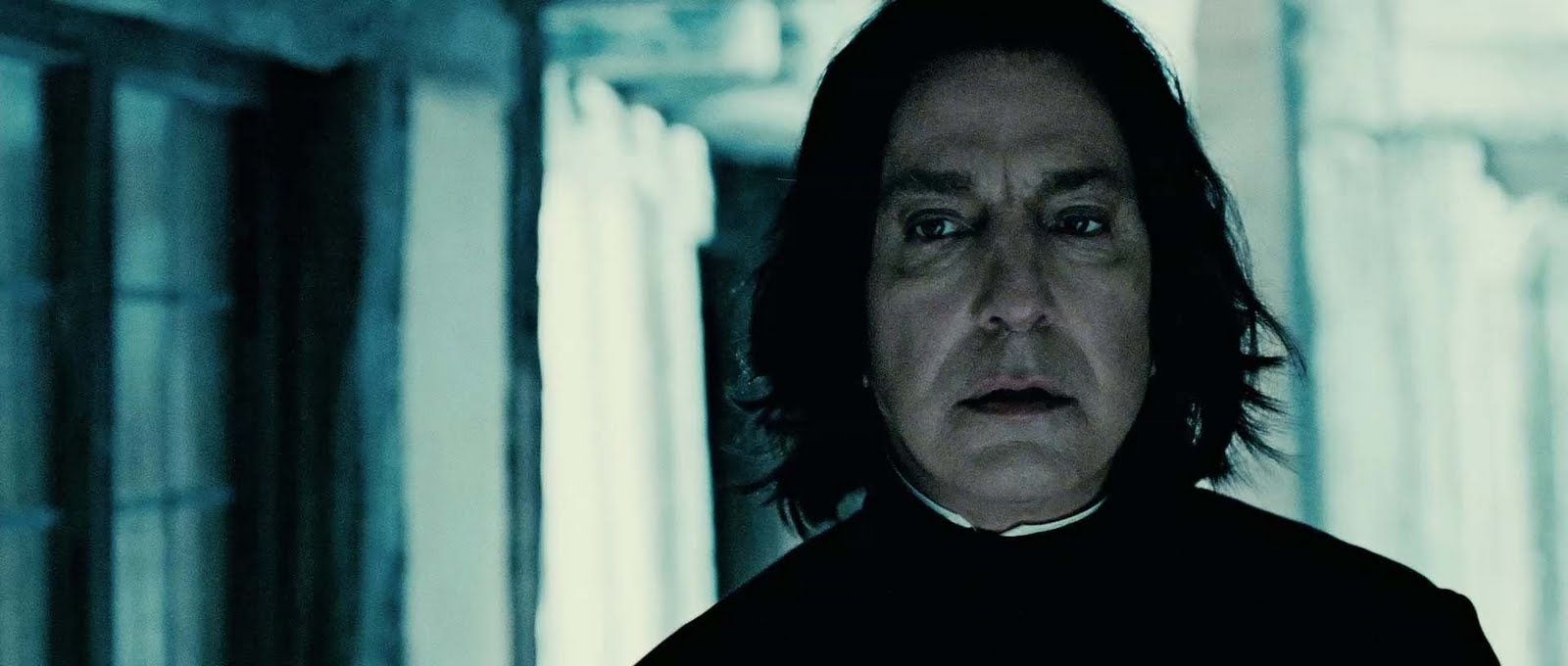
Ralph Fiennes finally gets to inhabit Voldemort in all his glory, and he delivers a strange, eerie beast indeed. Never lacking in menace, he gains much traction from always keeping the dark lord eccentric, left of centre and dangerously unpredictable. Danielle Radcliffe faces off against him with his usual grit and intensity. The film's biggest emotional blow, however, does not come from the heat of battle or in the long-awaited face off between Harry & Voldemort, but when Yates takes a side step to tell Snape's full story. It is a stirring yarn that finally puts a lid on the serious, sinister and ambiguous Severus Snape, and Alan Rickman plays it perfectly, as always. Of all the epic things that take place, it is Snape's story that resonated the most when leaving the theatre.

In terms of the source novels, Rowling shows how carefully and well plotted her series was by  bringing together all the strands she set up in her previous novels. The one thing I felt she underused is the Deathly Hallows of the title, although they feature prominently, their impact could have been made far more significant. Yates, too, falters slightly in failing to clearly explain the significance of the Elder Wand's allegiances, despite carefully setting up the sequence of events that determine its ultimate fate as far back as the Half-Blood Prince. He also introduces a subplot about Dumbledore's family history that serves to illustrate Rowling's consistent commitment to well-rounded heroes & villains who are neither purely good or purely evil (even Voldemort is portrayed as being lost, hurt & without love, rather than simply evil), but is never taken further or concluded.


Kudos to Yates, though, for retaining the largely metaphysical dialogue between Harry and Dumbledore in Kings Cross station (aka Limbo), although Rowling's resolution feels merely convenient without the film properly justifying the logic behind it. Long-devoted Potter fans are also given a sly pat on the back when Dumbledore tells Harry that things are no less real for occurring only in his head.

A satisfying, effective conclusion to an epic series, with a few holes, some surprises and just a slight lack of urgency.

Oscar potential: Some wish it would be a Best Picture contender on behalf of the series, but I just don't think its a strong enough stand-alone film to make the Academy take it seriously; Visual Effects are likely; Art Direction is a possibility (think Gringotts), the Make Up team deserves a nod for turning Ralph Fiennes into Voldemort, although make up has a hard time being recognised if it chiefly applies to one character only; possibly Sound Mixing & Sound Editing; & could Fiennes be taken seriously enough to get a Supporting Actor nomination? Probably not, but it would be good fun if he did.


Friday, August 26, 2011

Harry Potter and the Deathly Hallows, Part 1 - Review


The decision to split Rowling's final novel into two films is understandable for both financial and creative reasons (it almost turned into three), but the result is unfortunately two excellently produced and performed films that each feel somehow incomplete.  

Deathly Hallows Part I is the first to be set entirely away from Hogwarts, as Harry, Ron & Hermione go on the run from the Death Eaters & try to track down & destroy Voldemort's Horcruxes - objects in which he has hidden fragments of his soul to avoid mortality - in the process. Although it is an effective and beautifully shot chase movie, and ends smartly with the tragic return of Dobby the Elf, it ultimately feels like an extended prologue to the grand finale. 


Less plot driven than its predecessors, the action moves swiftly from one set piece to the next  which, while all well staged, only hint at epic.  The sequence inside the Ministry of Magic is a nice, zippy, change of pace, while the sinister influence of Salazar Slytherin's locket on Ron adds another level of pressure to Harry's existence (as if the burden of celebrity, the loss of every last one of his mentors and the responsibility of saving both the magic and muggle world from the greatest dark wizard of all time is not enough, Harry's best friend has to go and turn into a gloomy jerk ass). The young cast all perform well, miles from the perpetual, plastered grins of The Philosopher's Stone, as do the panoramic views that replace the usual grand sets. 


The biggest highlight, though - from a visual and plot point of view - is the animated sequence depicting the myth behind the Deathly Hallows - the Elder Wand, which Voldemort is after to kill Harry, the Cloak of Invisibility, which was given to Harry by Dumbledore (& is the most exciting feature of The Philosopher's Stone), and the Resurrection Stone - which really lends a sense of occasion to the coming finale, although Rowling could have exploited the Hallows more in the final equation, but more on that later. 

Oscar nominations: Art Direction (curious, as the only notable set is the exceptional ministry of magic which was already featured fairly extensively in The Order of the Phoenix), Visual Affects


Monday, August 8, 2011

Harry Potter and the Half-Blood Prince - Review


In the last instalment leading up to the grand finale of The Deathly Hallows, David Yates once again condenses a huge novel into a feature length film, but there is no clear over-riding story line to focus on. Instead, Yates balances plot strands ranging from the mystery of the Half-Blood Prince's Diary, the dark revelations of Tom Riddle's past, the now-raging hormones and love potions of 6th form Howartians, the going over to the dark side of Draco Malfoy, the arrival of the death eaters and the carefully planned murder of... well, I wouldn't want to ruin it. 


Yates does a good job of holding on to all the plot strands and creating a film that flows together with a swift momentum, largely thanks to Bruno Delbonnel's exceptional cinematography. He picks up the intensity with the gradual revelation of Tom Riddle's secrets, building up to the grim revelation of how he managed to cheat death and become the most powerful dark wizard of all time. 


The climax is carefully orchestrated and filled with significant detail that will play itself out in the face-off of Deathly Hallows. The skilled set of actors - old & young - skillfully communicate the nuances of the loyalties and betrayals that lead to probably the second most important death of the series. 

Jim Broadbent is great as the scattered and sinister Professor Horace Slughorn, new professor of... Defense Against the Dark Arts, although Dumbledore has other reasons for wanting him around. The standout performance, however, is Alan Rickman, gloomy and ambiguous as troubled Professor Snape. As a boy on a dark mission in way over his head, Tom Felton also finds new depths in Harry's schoolboy nemesis, Draco Malfoy. 


A satisfying, polished and full film that also serves as an exciting prelude to the finale.

Oscar noms: Cinematography


Sunday, August 7, 2011

Harry Potter and the Order of the Phoenix - Review


Another year, another new British director, but David Yates stuck around to finish the series - known for his acclaimed TV character-driven dramas, Yates is an interesting choice, but he lands on a good tone for the final 3 (4) instalments of the series, and possesses a nice visual flair.  


Order of the Phoenix features one of the best performances of the series in Imelda Staunton's Dolores Umbridge, a poisonous combination of Margaret Thatcher & Joseph McCarthy. In an effort to quieten Harry & Professor Dumbledore's claims that Voldemort has returned, the Ministry of Magic loans loyal state servant Dolores Umbridge to Hogwarts as - you guessed it - the new Defense Against the Dark Arts Professor & Ministry watchdog. It is not long before she starts to take over, declaring war on anything suspicious. The embodiment of the cold heart of authoritarianism wrapped in a shell of pink & bubbly, she's all the more lethal for never letting the smile out of her eyes, even when her lips are spewing venom. Considering it was the follow up to her Vera Drake triumph, its a wonder she missed out on an Oscar nomination.


Phoenix triumphs with a stirring plot around the past & present band of underdogs coming together with a mutual sense of something being wrong with the status quo. In the past, the legendary Order of the Phoenix teaming up against Voldemort. In the present, Dumbledore's Army preparing for inevitable war despite the Ministry's ban on practicing defense against the dark arts. 


Gorgeous sets (the Ministry of Magic is a highlight), great cinematography, Harry's first kiss, the Room of Requirements somehow emerging as a compassionate - silent - character, a great climatic battle, and another tragic death add the icing to the cake. One of the highlights of the series.


Also fair to mention that Evana Lynch is pretty good fun as kooky Luna Lovegood.


Oscar noms: Curiously, none. 


Harry Potter and the Goblet of Fire - Review


Out with Alfonso Cuaron, in with Mike Newell, in quite a departure from Four Weddings and a Funeral, Donnie Brasco and Mona Lisa Smile. Personally, I would have stuck with Alfonso Cuaron, but Newell does a good job, other than allowing Danielle Radcliffe to sport a highly rubbish haircut, and pulls off some impressive visuals, particularly the Quidditch World Cup, the dragon-duelling (excellent CGI) & the ominous maze of the triwizard cup final challenge.                 

Goblet of Fire is the last truly stand-alone story, as the triwizard cup takes centre stage, before the final three novels build up to the showdown between Harry and Voldemort. Harry is smartly cast as the underdog, unwillingly thrust underage into the triwizard championship, after saving Hogwarts three years in a row, so its easy to keep rooting for him (although you have to wonder what Harry finds intimidating about a inter-school challenge, even a dangerous one for seniors, after seeking out the Philosopher's Stone, the Chamber of Secrets and a werewolf's lair...).


Be it as it may, Harry gets to test his mettle & resourcefulness, while Mike Newell introduces females of the world to Robert Pattinson as generally nice, not very talkative Cedric Diggory. In between, hormones start to flair as Harry works up the courage to ask a girl to the school dance, while Ron & Hermione repress their feelings for each other, all before the great dark lord in the creepy 
climax. Ralph Fiennes relishes his role as dark lord Voldemort, with his hushed voice, piercing eyes & otherworldly intensity, and his brief performance puts Goblet on the map.  


Goblet is also notable for marking the point from which a major character will be killed off in each instalment, and because the band that plays at the school dance includes Pulp frontman Jarvis Cocker, and Radiohead guitarist Jonny Greenwood.


Brendon Gleeson & Miranda Richardson are colourful additions to the adult cast as Professor Alastor 'Madeye' Moody (the new 'Defense Against the Dark Arts' professor with - would you believe it - ambiguous intent) & tabloid reports Rita Skeeter, respectively.  


Oscar nominations: Art Direction 


Saturday, July 30, 2011

Harry Potter and the Prisoner of Azkaban - Review


Alfonso Cuaron was as close as the Harry Potter franchise came to a visionary director. I can't imagine why they didn't keep him on for the rest of the movies. Cuaron swathes the film in a new, richly gothic atmosphere & finally gets more gritty performances out of the child cast. In the adult cast, Gary Oldman as the titular escaped convict Sirius Black & David Thewlis as the new Defense against the Dark Arts professor, are excellent as Harry's damaged, morally ambiguous mentors. 


Cuaron's directing, Michael Seresin's cinematography & John Williams' Danny Elfman-esque (I could probably get shot for saying that) score lend a sense of weight & momentum right from the outset. Cuaron's Dementors are thrilling creations, far superior to the ones in Order of the Phoenix. Cuaron nails his tone, & sets the scene for the finale, with an early shot of a bluebird leading the camera around early morning Hogwarts scenery before being chomped by the Whomping Willow.


Harry's breakaway flight on Buckbeak the Hippogriff is one of the series' most stirring & poetic scenes in the series; a rare happy moment for Harry & a triumph of visual effects. The sets are exceptional, even by Harry Potter standards, Hogwarts and surroundings have never looked more stylishly gloomy, the werewolves are cool & tragic, the magic bus is a blast and the nifty time travel plot is smartly executed. Prisoner of Azkaban has no detractors. Easily one of the best in the series. 

Interesting to note that Mexican born Cuaron's presence ushers in the first non-white Hogwarts students, even if they are confined to the background.


Oscar noms: Original Score (John Williams), Visual Effects.

Harry Potter and the Chamber of Secrets - Review


Kenneth Branagh is good fun as preening, phony adventure writer Gilderoy Lockhart, the new 'Defense against the Dark Arts' professor. 

Unfairly regarded as an inferior retread of Sorcerer's Stone,  Chamber of Secrets still suffers from over-acting by the youngsters & a syrupy boarding school ending, but features some great set pieces, including the flying car, the whomping willow, a forest full of giant spiders (stealing from Tolkien & upping the ante) & an intense finale in the Chamber of Secrets featuring another giant beastie (Salazar Slytherin's Basilisk) & the 'memory' of Tom Riddle, who became Lord Voldemort. It is notable that JK Rowling introduces Voldemort's first horcrux as early as the second novel, already setting us up for the final showdown.

Chamber of Secrets also carries a strong social message in the story of Dobby the (somewhat annoying) elf. Dobby is a fairly impressive feat of CGI but, no doubt, overshadowed by the same year's introduction of Gollum in Lord of the Rings: The Two Towers.

Shirley Henderson is also good, mad fun as Moaning Myrtle, the unstable ghost of the second floor girls' bathroom. 

Oscar noms: None


Harry Potter and the Sorcerer / Philosopher's Stone - Review

It took me years to warm up to the Harry Potter series, but I finally did & have done some catching up:


As an introduction to the magical Hogwarts universe, Sorcerer's Stone, is a beautiful piece of work. Its saccharine boarding school adventure ending & the awful acting from the child set, however, make it harder to take seriously. But with impeccable sets (Diagon Alley is a marvel), a haunting first shot of Hogwarts - oh how it will be destroyed in the years to come & John Williams' classic score, there is plenty for grown up cinema-goers to appreciate. 

Unfortunately, the visual effects are dubious - while the invisibility cloak is still something to write home about, "Fluffy", & the rest of the special effects guarding the Sorcerer's Stone, look a bit clunky. Especially considering this was made the same year as Lord of the Rings: The Fellowship of the Ring  & AI: Artificial Intelligence.  

Script-wise, it is notable that JK Rowling had Harry talking to snakes right from the outset; as with Chamber of Secrets, its impressive how well planned & plotted her series was. It is also a nice showcase for Rowling's deft touch with surreal logic (a villain's face implanted on the back of a blithering idiot's head).         

At least the adult cast is excellent as ever. Maggie Smith is slick, if underused, as McGonnagall & Richard Harris makes a gentle & touching Dumbledore (although I will confess I prefer Michael Gambon's take), but the standouts are Robbie Coltrane as lovable Hagrid and the always-impressive Alan Rickman (can you imagine anyone else in the role) iconic as ambiguous Severus Snape.


Oscar nominations: Original Score, Costume Design (meh), Art Direction / Set Decoration