Tuesday, February 19, 2013

On Life of Pi and the matter of Virtual Cinematography


With Life of Pi all but sweeping the year's cinematography awards, and expected to take the Oscar on 24 February as well, I'm struggling to make peace with the odd idea of virtual cinematography being honoured over traditional lensing. I appreciate the need for virtual cinematography and certainly admire its results - the visual awesomeness of Avatar, Tron Legacy and Life of Pi is undeniable - but where is the line between Cinematography and Visual Effects?

There's no doubt that Life of Pi is the visual movie event of the year, but to see the prize for best lensing go to a digitally manufactured product is odd. In the past few years, it has been the Academy's preference: Avatar winning for an almost entirely virtual world in 2010, Hugo (with its virtually filled in cityscapes) beating the jaw dropping photography of Tree of Life in 2011. It could be that both those films were simply more popular than their contenders, but it's interesting how easily the Academy has embraced the reliance on CGI in this most essentially cinematic craft.


The acting fields are notoriously resistant to motion-capture performance (Andy Serkis, in particular, has been repeatedly snubbed for his groundbreaking work as Gollum, King Kong and Caesar in The Lord of the Rings / The Hobbit, King Kong and Rise of the Planet of the Apes, respectively), even though the primary work is done by an actor and only digitally adapted in post-production (much like the seascapes of Life of Pi). Somehow they still see Gollum and Caesar as a Visual Effects achievement, rather than an acting one. Any arguments about unfair disadvantages from digitally "enhanced" acting count just as strongly against virtual cinematography.

Of course, digitally enhanced cinematography isn't a new phenomenon. Back in 2001, Bruno Delbonnel was one of the first to use computers to enhance the hues and tones of his footage in post-production for Amélie. But is it cheating, or at least an unfair advantage? Perhaps it doesn't matter. Perhaps it's just how the industry is changing. When it comes to complex, effects-driven 3D films like Avatar or Life of Pi, digital enhancement is a fairly logical extension of the filming process, but when it comes to handing out little gold men for the year's best representation of the Cinematographer's trade, what are Cinematographers awarded for? Lighting? Composition? Movement? Visual metaphor? Mood? Technical dexterity or innovation? Getting the right angle on a gorgeous landscape? Of course it depends from film to film. So when a film and story like Life of Pi is so reliant on the poetry of its visuals, a cinematographer who rises to the occasion, with or without the help of computers, to deliver what his director envisions is one worth awarding (although I'd argue we'd be falling over ourselves in a whole different way if he did it without the computers).

So if the visual design and execution and effect is what we're awarding, regardless of how the cinematographer got there, why not recognise some of the incredible landscapes created by Pixar in recent years? The great (Oscarless) Roger Deakins, for example, consulted on the "cinematography" of Wall-E, advising the technical team on effective lighting and realistic camera movement (to create a more immersive cinematic experience with all the authentic bumps and shakes of a real camera). There's no denying the visual beauty of a film like WallE, or the technical brilliance of the underwaterscapes in Finding Nemo (which go to great pains to capture the light and shade of an ocean backdrop). So what sets WallE apart from Life of Pi, or even Avatar, where a large chunk of the film is digitally animated?

While we're at it, Tim Burton's Alice in Wonderland won an Oscar for its Production Design, even though much of the execution was digital. Burton Produced Nightmare Before Christmas, on the other hand, features iconic, influential sets as tangible as the chair you're presumably sitting on, only miniature. But what did it contend for at the Oscars? Visual Effects. Once again, WallE features impeccably designed sets, but you'd barely see it contend for them. And while inserting a photo-real (for back then) Gollum into an actual real life background will win you a Visual Effects Oscar, placing animated fish into a photo-real (if mildly stylised) ocean backdrop will not even get you nominated. But perhaps I am splitting hairs.

So what's the distinction? Does it only count as cinematography or production design if it features at least some real actors? Perhaps the distinction is the real collaboration between two worlds - it's okay that Avatar or Life of Pi were largely finished on computers, because they started on real sets, with real cameras, even if just for the bones of the eventual visuals. For Pixar, it's all computer. Perhaps that is a fair distinction.

On Oscar night, both Claudia Miranda and the Visual Effects team will pick up Oscars for their respective contributions to the film's astounding visuals. And power to them. Digital enhancement is here to stay and, if it  ups our movie going & movie making experience, let's embrace it (even if it means Roger Deakins goes home empty handed, again).


While we're at it, let's take a look at some of the good old-fashioned camera work that was overlooked by the Academy this year, after the cut:

Wednesday, January 16, 2013

Benh Zeitling's Glory at Sea

Now that the Academy has bestowed its love and approval upon Beasts of the Southern Wild, it's only fair to stand back and look at what director Benh Zeitlin has achieved: Beasts is his first feature, which he adapted from Lucy Alibar's play, directed (obviously) and composed the brilliant score for. With a tiny (estimated) budget of $1 800 000 and a cast of first-time actors, Zeitlin has created an instant classic - poetic, wild, emotionally powerful with a distinctively voice woven into every element, and a brave, provocative point of view showing us a world and perspective we've likely never even considered.

It bodes us well, then, to have a look at Zeitlin's 2008 short film, Glory at Sea. Plenty of Beasts vibes. In fact, it seems to contain all the seeds that would eventually become Beasts. I await his next move with fascination. Thanks to Awardsdaily for the link.

And in the wake of the Oscar nominations... (and the Golden Globes, and the Critics Choice winners)


Well, there's nothing better than surprises from the Oscars (when you have a natural resistance to Groupthink), and this year sure had its fair share! Thanks to the early voting date, voters had to get up to speed with all the contending films earlier than usual, and vote without the templates of the major Guild Awards (the disconnect between the Oscars and Guilds that announced just before voting cutoff shows that the majority of voters probably didn't wait 'til the last minute... or last minute online voting was a disaster...).

Any which way, the Oscars had to think for themselves this year. And the results are refreshing (even if it is weird not having the two de facto frontrunners out of the race for Best Director). It sucks for Ben Affleck and Kathryn Bigelow, but it keeps the race unpredictable, for a change!

The biggest surprises?

Ben Affleck & Kathryn Bigelow's snubs in Best Director put a serious damper on their respective films' Best Picture campaigns, which puts a serious damper on many a Oscar predictor's forecasts. The resistance against Zero Dark Thirty is clear, but Argo's recent wins at the Golden Globes and Critics Choice keep it a threat to win Best Picture (even if it means the dubious honour of joining Driving Miss Daisy as the only films to win Picture without even a nomination for Director).

More realistically, it makes Lincoln the real frontrunner, and a worthy one - great film, great writing, great performances, great director stretching himself... - but also a somewhat slow and intellectual one. Awardsdaily's Sasha Stone smartly points out that Academy voters clearly preferred films that moved them - Amour, Beasts of the Southern Wild  - over films that made them think or demanded debate - Argo, Zero Dark Thirty. Which does not bode too well for Lincoln as a Best Picture winner (remember that even Saving Private Ryan was bested for Picture by Shakespeare in Love). The other film they showered mildly excessive love upon? Silver Linings Playbook. Which becomes your new runner up frontrunner. I like the film, but it's a bit lightweight for me, given the competition.

Which brings us to...

Jacki Weaver nominated for Best Supporting Actress, which bodes very very well for Silver Linings Playbook, which scored the big 4 (Picture, Director, Screenplay & Editing) plus nominations in every acting category. It's also worth noting, again, that David O'Russell bested Biglow, Affleck, Tom Hooper & Quentin Tarantino for that Director slot. Not insignificant. But I digress. Jacki Weaver is great in Playbook and her nomination is a great twist ending to the race between Ann Dowd and Nicole Kidman (and arguably perpetual Emmy winner Maggie Smith) for the fifth Supporting Actress slot. It's easy to be glad for the lovely Mrs Weaver (although it's equally easy to feel really sorry for the quit brilliant Mrs Dowd). But so it goes. Ann Dowd's career is still changed, although not to the degree she may have hoped.

And to belabour the point:

Amour and Beasts of the Southern Wild killing the competition. The Foreign and independent success stories of the year, without a doubt. Two wildly brilliantly works of cinematic art by an old (and brand new) master. They killed the critics awards, but remained Oscar outsiders. Beasts was a good Best Picture contender (although a presumed 9th or 10th spot contender), while Amour was the Foreign Language Film frontrunner, and a Director dark horse contender, but I think few expected both to score Best Picture, Best Director, Original and Adapted Screenplay (respectively) and Best Actress nominations. Very significant. And very satisfying. (If you are not following Amour director Michael Haneke's parody Twitter account, incidentally, do so now.)

Which brings us to:

Emmanuelle Riva and Quvenzhané Wallis shaking up the Best Actress race. The oldest and the youngest contenders have joined the race. It's no longer simply Jennifer Lawrence vs Jessica Chastain, or even Naomi Watts pulling an Adrien Brody-style secret-option-C Win. Now it's Riva vs everyone else. And literally anyone could win. Except, probably, Wallis, who I think many would feel is just too young. But, for the first time in years, we have a real race. And not just in Best Actress. For now, Best Picture, Best Director, Best Actress and Best Supporting Actor are literally anyone's game, which, at this point of the race, is quite something.

Precursor / Oscar disconnect. Both the Best Director and Best Actress races will be significantly out of sync with the Precursor awards this year so, while Ben Affleck scoops up every award along the way, he won't contend at the Oscars and, while Jennifer and Lawrence flash their new Golden Globes and battle it out at the Screen Actors Guild, it doesn't mean the Oscar doesn't go to Emmanuelle Riva. You could call it a travesty, but I'm loving it.

Joaquin Phoenix in, John Hawkes out. Thankfully, Joaquin Phoenix's startling performance in The Master proved simply too brilliant to snub but, perhaps understandably, Bradley Cooper and Silver Linings Playbook had become simply too big to ignore, so John Hawkes got shafted for The Sessions, and it's a real pity but so it goes.


Enough surprises. Some random trivia:

  • Robert De Niro & Steven Spielberg have each hit their 7th career nominations
  • At a mere 7 years old, Quvenzhane Wallis becomes the youngest Best Actress nominee in history (Justin Henry was 8 when he was nominated as supporting actor for Kramer vs Kramer and Tatum O'Neal was 10 when she won supporting actress for Paper Moon, while Anna Paquin won her supporting Actress Oscar for The Piano at 11).
  • Emmanuelle Riva turns 86 on Oscar night, and would become the oldest Oscar winner (Christopher Plummer currently holds the record for his win for Beginners at 82. 
  • For the first time in Oscar history, there is not a single first time nominee in Supporting Actor or Supporting Actress.
  • Every single Supporting Actor nominee is a previous supporting actor nominee (seriously, this has never happened before)
  • Every single Supporting Actor nominee is a previous Oscar winner, and four of the five won for Supporting performances. Epic. Or thoroughly irrelevant.


Full list of nominees after the cut (via Awardsdaily, because I'm too lazy / smart to retype them):

Wednesday, January 9, 2013

And just before the Oscar nominations hit...

Forecasting the Oscars is not really about the Oscars, because even the Oscars are not really about the Oscars. It's about loving movies (The Oscars themselves may be about making more money out of movies, and winning Emmys, but let's not judge). We love movies and we love to see things we love, things that moved us, things that wowed us, things that altered us, praised and celebrated. And we love to bitch and moan when stuff we love is sidelined for stuff we didn't much care for.

Be that as it may, tracking the Oscar race (the whole silly spiel leading up to the whole silly event) is fun for two reasons - 1) for some reason it's fun to guess how the Academy is going to think, and to see how the general consensus shapes up from the early Film Festivals to the myriad of awards that start pouring in at year end - seeing the year in cinema shape up to what the records will remember. 2) Tracking the whole thing allows you to keep up with the also-rans, the almost-made-its, the coulda-been-contenders, those who thankfully missed the cut and those who inexplicably got shafted.

I will passionately write in favour of the overlooked when the dust of D-Day has settled, but in anticipation of tomorrow, let's have a look at the groupthink as it stands now. For purposes of this post, I will refer to the conglomerate of Critics Groups Awards as "The Critics", and to the conglomerate results of other groups like Film Festivals and Award-giving bodies from the Gotham Awards to the Golden Globes as "The Precursors".

Best Picture:


See here.

Best Director:


The Critics backed Kathryn Bigelow for Zero Dark Thirty (still with a massive lead, despite Torture Porn backlash), Ben Affleck for Argo (slowly becoming Bigelow's less-controversial alternative), Paul Thomas Anderson for enigmatic The Master, Ang Lee for the gentle, technically astounding Life of Pi and Steven Spielberg for his manically detailed biopic of the great President, Lincoln (threatening to sneakily become the one to beat).

Click to enlarge (regrettably abbreviated for the sake of space)

The Precursors also favoured Kathryn Bigelow, closely by Ben Affleck, Steven Spielberg, Ang Lee and David O'Russell for crowd pleasing indie rom com Silver Linings Playbook, in that order.

That gives us a logical top four of Bigelow, Affleck, Spielberg and Lee, which matches yesterday's Director's Guild nominees. But the fifth slot remains open for the taking. The Critics went for Paul Thomas Anderson, but the Academy is unlikely too (too weird, too much ungrateful Joaquin Phoenix), The Precursors favoured O'Russell, and the Directors Guild threw a bone at much criticised previous winner Tom Hooper for Les Miserables. The BAFTA's are reminder that you can't count out Quentin Tarantino for the ever-popular and daring Django Unchained, or Michael Haneke scoring an art-house slot for critically raved Amour.

On the outskirts with multiple nominations? Benh Zeitlin for Beasts of the Southern Wild, Wes Anderson for Moonrise Kingdom and Leos Carax for Holy Motors. 

My guess? Bigelow, Affleck, Spielberg, Lee and Tarantino. But honestly, I'm hoping for a surprise. So let's say Haneke!


Click to enlarge

Best Actress:


An interesting field with Jessica Chastain (Zero Dark Thirty) and Jennifer Lawrence (Silver Linings Playbook) way out in the lead, hitting every single note that counts.For the remaining three? Anyone's guess, although we can guess fairly closely by now.

After Jennifer Lawrence, The Critics backed french veteran Emmanuelle Riva in a big way, citing her even more often than Jessica Chastain. But sadly she is likely to be snubbed by the Oscars as Marion Cotillard is already in the mix, and nominating two subtitled performances is just asking too much, and Marion Cotillard is better known. And hotter. Sorry Emmanuelle. We continue to hold out hope, though. After that, they pushed the youngest contender of the year - Beasts of the Southern Wild's Quvenzhane Wallis, hoping for a  Keisha-Castle Hughes Whale Rider type miracle, and Naomi Watts surviving a Tsunami in The Impossible.

Click to enlarge
The Precursors have Chastain and Lawrence perfectly on par, followed by Marion Cotillard, Emmanuelle Riva and Quvenzhane Wallis.

On the outskirts are Helen Mirren as Alma Reville in Hitchcock, and a trio of brilliant, underseen performances skirting infidelity: Ematatzy Corinealdi in Middle of Nowhere, Michelle Williams in Take This Waltz and Rachel Weisz in The Deep Blue Sea. Interestingly, Keira Knightley's adulterous Anna Karenina was almost uniformly snubbed (only gaining notice from the Golden Satellites).

Click to enlarge
Although it's hard to vote against the iconic, much-loved Riva and Wallis, Naomi Watts, Marion Cotillard and Helen Mirren scored campaign-making twin nominations from the Screen Actors Guild and the Golden Globes, and have career credibility to back them. Cotillard and Mirren proved their popularity with BAFTA
nominations today (although so did Riva), while Watts is massively overdue for her second nomination.

My prediction? Chastain, Lawrence, Watts, Cotillard and Mirren, although I continue to hope for Riva.


Best Actor:


A very tight race between six very strong contenders. It seems a shame to shut out any one of Daniel Day-Lewis for Lincoln, Joaquin Phoenix as an alcoholic seemingly functioning entirely outside of society's rules in The Master, John Hawkes touching and funny as real-life quadriplegic Mark O'Brien falling for the sex surrogate he hires to see if his naughty bits work in The Sessions, Hugh Jackman singing everyone to tears (in a good way) in Les Miserables,  Denzel Washington digging up the soul of a complex alcoholic / hero in Flight and Bradley Cooper trying to get the better of Bi-Polar in Silver Linings Playbook, but one of them is going to miss out.

On the face of it, Bradley Cooper seems the least heavy-weight of the bunch, but the Precursors have him out front as the most consistently nominated Actor of the year (beating even Daniel-Day Lewis with two additional nominations, AND an additional win). Everyone else sits squarely with five nominations a piece, and it will be for the Academy to decide who they like best. Joaquin Phoenix's snub by the Screen Actors Guild (presumably for expressing his dislike for The Oscars and the campaigning it takes to win them) is probably bodes poorly for him, as is the general lack of support for his tricky, artsy film. But his performance seems too huge, too iconic, too brilliant to ignore.

John Hawkes was overlooked at the BAFTAs, although co-star Helen Hunt was nominated, but the two have been campaigned and nominated so consistently as a pair, it is hard to imagine him missing.

Click to Enlarge
The Critics went for Daniel Day-Lewis in a huge, almost unrivaled, way, followed by Joaquin Phoenix, John Hawkes, Denzel Washington and, interestingly, Holy Motors' multi-character weirdo Denis Lavant pushing out both Hugh Jackman and Bradley Cooper.


In the final evaluation, I'm going with Daniel Day-Lewis being unshakable, Hugh Jackman and Bradley Cooper being too enticing as Box Office stars making good (and presumably attracting significant Oscar viewership as well), Denzel Washington being too respected to pass up, and Joaquin Phoenix too brilliant not to be forgiven, leaving John Hawkes sadly on the sideline. But only time will tell.

Click to Enlarge

Supporting Actress:


Anne Hathaway has already won Best Supporting Actress for singing, crying, shaving her head and dying, all at once, in Les Miserables, although the critics gave quite a push for Sally Field as Lincoln's unstable, quietly hysterical other half in Lincoln. They're both guaranteed their spot, as is Helen Hunt as a self-possessed sex surrogate calmly baring all in The Sessions. 

Battling out the final two slots are the ever reliable Amy Adams as Phillip Seymour Hoffman's stern, mysterious and frankly creepy wife in The Master, Ann Dowd as an impressionable fast food store manager performing horrendous deeds with presumably good intentions in Compliance and Nicole Kidman going full-on trashy Southern prison slut in The Paperboy. 

Adams is all but locked, save that odd SAG snub, while Kidman was all but missing in the race until her SAG / Golden Globe double-whammy. Dowd is the most hit-and-miss, as far as prescursors go, but was universally praised for her breakthrough performance, and has made it abundantly clear how much a nomination would mean for her career.

On the outskirts are British lovelies Judi Dench at her best yet as the impeccable M in Skyfall, and Maggie Smith throwing around racist one-liners, and turning into a good person, in The Best Exotic Marigold Hotel.

My guess would be that both Kidman and Dowd make it in a last minute sweep of hype, and Amy Adams is left out cold.

So: Anne Hathaway, Sally Field, Helen Hunt, Ann Dowd and Nicole Kidman.


Supporting Actor:


This year, the supporting actor race is riddled with previous winners: Tommy Lee Jones (Supporting Actor Winner for The Fugitive) and Phillip Seymour Hoffman (Lead Actor winner for Capote) have their nominations in the bag for Lincoln and The Master, respectively, and likely go head-to-head for the win.

Christoph Waltz (Supporting Actor winner for Inglorious Basterds), has proven ever popular since Django Unchained came on the scene, and looks set to reap his second nomination off of Quentin Tarantino's writing, while Javier Bardem (Supporting Actor winner for No Country for Old Men), delivers an astonishing, campy, whispery villain in Skyfall.

Veterans Alan Arkin (Supporting Actor winner for Little Miss Sunshine) and Robert De Niro (Supporting Actor winner for The Godfather Part II and Lead Actor winner for Raging Bull) round out the list with celebrated, if not brilliant, turns in Best Picture frontrunners Argo and Silver Linings Playbook respectively. I'm as happy as anyone to see De Niro back in the game, but in all honesty his performance is good but not brilliant. The same could be said of Arkin, although Argo needs an acting nomination to stay in the running as a Best Picture winner.

Click to Enlarge

The wildcards are Leonardo DiCaprio, seemingly desperate for an Oscar (and lately a persistent also-ran) as a colourful Tarantino villain in Django Unchained and Matthew McConaughey, making sure he stayed in conversation this year with not one, not two, but four acclaimed performances in Magic Mike, Bernie, Killer Joe and The Paperboy.

In the final equation, my guess is for Hoffman, Jones, Arkin, Waltz and DiCaprio. Although I would prefer Bardem over DiCaprio, personally.


Click to Enlarge
Let the good times roll! We'll celebrate and lament in the morning!

Kick-Ass Trilogies: Parts 6 to 10

It's great when an awesome movie comes along. It's even better when three of them come along, telling when sprawling, awesome, interconnected story. Our celebration of the most kick-ass cinema trilogies continues below.

Kick-Ass Trilogies Parts 1 - 5 here.

6. The Three Colours Trilogy 

Krzysztof Kieslowski's thematically intertwined meditations on the colours of the french flag and how the political ideals they represent - liberty, equality and fraternity - apply to modern french society. If that all sounds incredibly high minded, the trilogy is essential viewing simply as a series of cinematic tone poems built around three beguiling french leading ladies- kicking off with Blue, which follows a widow's intense and impressionistic journey to creative and emotional liberty following the death of her famous composer husband; shifting tone drastically for White's dark screwball comedy of a humiliated man-turned-beggar trying to restore equilibrium to his life through revenge; and landing somewhere in between for Red's poignant examination of human connection and social contracts in general, and of the slowly growing relationship between a taciturn old man and a gentle student / part-time model, in specific. While White is at somewhat tonal odds to Blue and Red, each film earns its place in this ambitious, carefully executed trilogy. Each film ends in tears (both good and bad) and features an exceptional Zbignieuw Preisner score. If that all still sounds too serious, there are cartoons below.

7. The Toy Story Trilogy 

Toy Story broke exciting new ground for animation and not only invigorated an industry, but irrevocably changed it - mostly for the better. It endures as a film because, beyond the landmark technological advances,  is a story full of real laughs and genuine heart. Toy Story 2 copied the formula, but somehow managed to improve on all the best elements of the original (although the Sarah McLachlan musical moment is too much for me) doing, in other words, exactly what a sequel should. The third instalment had every reason to be stale, but showed up startlingly fresh, funny, sprawling and more heart-wrenching than ever. Let's just hope the anomaly of continuing returns shows up for the dubious fourth instalment.

8. The Terminator Trilogy 

He said he'd be back, and he was. The Terminator established Ah-nold and his lifeless one-liners as an eternal part of the pop-zeitgeist, well weaving an astonishingly satisfying time-travel tale. But as legendarily thrilling as The Terminator is, Judgment Day is even better, but in completely different ways. Where else does the villain from the first return as the hero of the second, without falling flat on his credibility? Linda Hamilton and Robert Patrick must take much of the credit for the success of Judgment Day (whose relentless chase all but traumatised me as a kid), while the groundbreaking visual effects are still reason enough to revisit the either of the first two films (if any of the many other reasons don't do it for you). The third instalment is negligible, but succeeds in not failing. It's perfectly okay.

9. The Alien Trilogy 
Although not envisioned as a trilogy, the Alien trilogy benefits from a trio of legendary, divergent, directors. Ridley Scott's Alien is a classic, claustrophobic haunted house thriller with gorgeous production design, a sensational monster in the shadows, and a dashing new star in her tighty wighties. James Cameron's Aliens replicates the premise - complete with something-is-still-in-your-escape-pod ending - but expands it into a heart-pounding actioner with, as the title suggests, an army of aliens to the original's solitary stalker. Ripley trades her tiny panties for fierce maternal instincts and an iconic action heroine is born. The oft-derided third instalment was disowned by director David Fincher, but is in retrospect an entertaining, gloomy horror that annihilates everything that came before, including Ripley while it shifts the focus to the evil government bureacrats behind the Alien missions as the real villains. If nothing else, it's a final, intense face-off between Ripley and the Alien, and provides the necessary thrills admirably. Alien Resurrection? An ill-judged reboot / spinoff. Don't talk about it.

10. The Back to the Future Trilogy

Really this is the same movie made three times - in 1960s suburbia, a technologically-advanced 2015, and the Wild Wild West. But what a movie. How can you dislike something made with so much joy, intention to please and iconic 80s styling? The original has by far the tightest plot - as 80s teenager Marty McFly travels back in time to make sure his parents fall in love and, well, make him - while the originals are just good fun as Marty meets different versions of his family and friends in the near-ish future and distant past, and eventually learns that reacting to taunting bullies just gets you in trouble. Best viewed back-to-back with family / friends and plenty of junk food.


Ground rules after the cut:

Campaign Update - Bring New York Film Skills to Africa


Woo hoo! $800 donated, and 51 days to go! Our latest, very generous, contributors proved that every donation makes a difference (and big donations make an even bigger difference!). Huge thanks to:

Elsa De Jager - $500 donated
Ina Joubert - $30 donated

Please keep the momentum going while I email Steven Spielberg for a donation. You can help by watching our cheesy campaign video - shot all over our beautiful hometown, Pretoria, South Africa, for your viewing pleasure - sharing our campaign with all your rich friends (this part is free) and contributing what you can, when you can. Every $ helps keep the momentum going.


Saturday, January 5, 2013

Ginger and Rose Trailer

The latest from unique writer / director Sally Potter (Orlando, Yes), starring an ever sophisticated Elle Fanning as titular Ginger and newcomer Alice Englert as Rosa; two smart, free spirited young girls facing their friendship off against their responses to the nuclear threat in 1960s London. Sports a grand supporting cast of Annette Bening, Christina Hendricks, Oliver Platt, Timothy Spall and Alessandro Nivola.

Why you should see The Great Train Robbery (1903)

Dear future cinephile,

You should really see The Great Train Robbery. It is, according to IMDB, the first American narrative film, that is to say, the first example of narrative storytelling in American Cinema. If not the first, then it is certainly one of the earliest examples.

The plot is fairly simple - a group of bandits go to quite some effort to hold up a train and rob all the passengers. The station manager they tie up and knock out at the start is awoken by his precious little daughter, alerts the town folk at a barn dance, and they all jump on their horses, track the bandits into the forest and, well, there's a shoot out. You can see for yourself who wins. Frankly I'm not 100% sure.


Far more interesting is what it means for cinema in terms of style and content. It certainly marks the Western (or arguably crime thriller) as America's oldest cinema genre. At just twelve minutes long, it contains violence, dancing, religion, retribution and, probably unintentionally, an ambiguous ending.

It's almost surprisingly violent considering its turn of the century audience - the bandits never hesitating to off anyone who gets in their way, whether by shooting a fleeing passenger in the back or beating a train engineer to death with a rock.

Cinematically, it obviously takes its visual storytelling queues from the only point of reference it likely had - the stage. Consequently, it is made up of 14 separate scene set ups with nigh on zero camera movement (give or take a camera pan or two).

It does, however, diverge from the limits of theatre on two accounts which, viewed rightfully as the birth of the unique magic and possibility of cinema, are thrilling in their simplicity:

1. Visual trickery through continuity editing:
Obviously the film uses editing to string together its 14 scene set ups into a single, multi location narrative, but far more exciting is the use of editing to trick us into seeing a train engineer (that what Wikipedia calls him in the plot synopsis. I don't know what an engineer is doing shoveling coal, but I don't know anything about trains either) wrestled to the ground by a bandit, beaten to death by a rock and thrown off the train. It's an alarming moment, even today, and all thanks to a frankly clumsy, but effective, bit of editing that ties together a shot of the bandit actor wrestling down the train engineer actor and a shot of the bandit actor beating an engineer-resembling puppet with a rock and chucking it off the train. It's a simple trick, but it's cinema magic at it's best - a startling moment uniquely executable on screen.  

2. The dramatic close up
In keeping with its theatre roots, the entire film is shot in long shots; all the action happening within the confines of the (mostly) stagnant scene set ups. The film only deviates from long shots in its iconic, poetic, oft homaged final shot: a close up of a bandit slowly drawing his gun and firing straight at the screen. It's probably the films most powerful moment, although it creates some narrative ambiguity. Director Edwin S Porter presumably also made use of superimposition to achieve the shot, displaying yet another case of thrilling cinematic trickery. He is also on record as saying that the shot could just as easily have been the film's opening shot, emphasising its significance as a dramatic, rather than narrative device.

All in all, a big Hear! Hear! for a significant chapter in cinema's formative years.


Friday, January 4, 2013

Oscar Forecasting (and, oddly, defending the Golden Satellite Awards)


This is an interesting year for observing the Oscars. Academy voters are under pressure to have their nominations in super early (final submission of ballots has been extended to 4 January, i.e. today), which is way earlier than usual. It puts voters under pressure to see everything with "awards potential" within days of the festive season (because, obviously, they all actually watch all the screeners they're sent for free). It also puts voters at a bit of a loss, as their votes will have been submitted by the time most of the big precursor Awards roll in. Which means no carbon copying this year - Oscar voters will have to tell us what they really liked - for better or worse.

The only precursor nominations really influencing voters at this point will be the Screen Actors Guild (for the four acting categories), The Golden Globes (which is a bit less reverent and a bit more of a college popularity party than the Oscars), to an extent the National Board of Review winners, the Critics Choice Award nominees and, for last-minute voters, the Producers Guild Awards' Top 10 films. As for directing, editing and all the rest, Oscar voters are on their own (note: the Art Directors Guild also released their nominees recently, but with three categories of nominees - Contemporary, Period and Fantasy - they offer a shortlist of contenders at best).
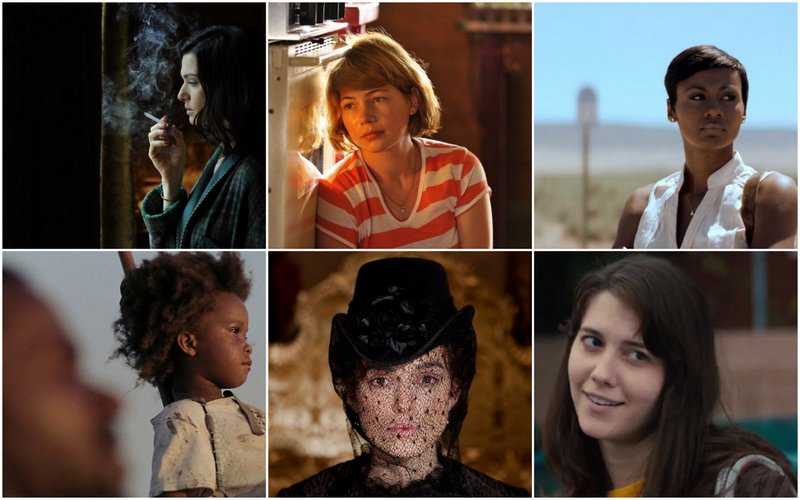
Of course, there are other awards for the conscientious to look to, but these are mostly made up of festivals (Sundance, Cannes), niche interest groups (Independent Spirit Awards, Gotham Awards, NAACP Image Awards) or non-trend-setting, independent-minded curiosities like the Golden Satellite Awards (who, say what you will, have an uncanny knack for highlighting that annual female performance whose singular brilliance seems to have flown under the radar of every other awards body -  think Gillian Anderson in The House of Mirth (2001), Toni Collette in Japanese Story (2004), Laura Linney in P.S. (2005), Gretchen Mol in The Notorious Betty Page (2006), Tilda Swinton in Stephanie Daley (2007), Shohreh Aghdashloo in The Stoning of Soraya M (2009), Tilda Swinton in I Am Love (2010), Vera Farmiga in Higher Ground (2011) and this year's Emilie Dequenne in Our Children).  

This leaves Oscar voters to either make up their own mind (which either means seeing everything or voting for what's popular and ticks the right boxes), or trawl through the reams of Critics Group nominations. In the past, however, Academy voters have shown some resistance to being influenced by the Critics Groups, only yielding nominations where the critics threw unanimous, overwhelming support behind a particular film (Sideways comes to mind) or performance (Melissa Leo, Frozen River / Richard Jenkins, The Visitor) to the point where ignoring it becomes unhip. Of course, this doesn't always work (lament The Dark Knight Rises, the brilliant Paul Giamatti in Sideways, and The Social Network winning Best Picture). It will be interesting to see to what extent the Academy allows themselves to be influenced by the Critics' precursor picks.


For purposes of this forecast, let us refer to the top consensus of nominations from the various Critics Groups as "The Critics", and the most nominated contenders from the current precursor awards bodies as "The Precursors". Handy, extremely geeky Excel Spreadsheet extracts will offer support.

Best Picture

There's little reason to think Oscar's Best Picture will veer far from the Producers Guild's Top 10, even if voters handed in their ballots before the PGA announced their nominations. In a very strong year for movies, critical consensus seems to have formed surprisingly easily around at least 9 films:

The two important-feeling political thrillers:
  • the controversial Zero Dark Thirty
  • the massively entertaining Argo
And their companion piece, Spielberg's best-in-years Historical Political Drama, feeling perhaps more relevant and important than any and anchored by an already legendary lead performance:
  • Surprise Box Office success Lincoln 
  The two little indie movies that could:
  • Beasts of the Southern Wild
  • Moonrise Kingdom
The divisive literary / stage adaptations (and fair box office successes):
  • Les Miserables
  • Life of Pi
And the (mostly) crowd pleasing comedy / drama (/Western)s:
  • Silver Linings Playbook
  • Django Unchained (arguably also a political historical thriller of some sort with a weight of importance behind all the cool and gags)
Which leaves, potentially, one spot open for a tenth film (Oscar's Best Picture nominees are decided by a preferential balloting system which basically requires a film to have a minimum number of First Place votes to become a Best Picture contender - there will be as many nominees as there are films with enough number one votes, but never less than five. Last year we had nine.)

Conventional wisdom says the tenth spot should be reserved for one of the year's respectable action blockbusters - The Dark Knight Rises, Marvel's The Avengers or the Producers Guild pick, Skyfall - or critically respected money-maker Flight, but don't count out critical darlings The Master or Amour for the Tree of Life art-house slot. For my money, if there are ten nominees, bank on The Impossible getting in. It's been all but missing from the race so far, but it's a major tearjerker with acclaimed performances and recent support from the likes of Angelina Jolie and Reese Witherspoon. If The Blind Side, War Horse and Extremely Loud and Incredibly Close have taught us anything, it's Don't Underestimate the Power of Sentiment. 

There's also popular Golden Globe Comedy and Screen Actors Guild Ensemble nominee The Best Exotic Marigold Hotel, but if that makes the cut I simply won't acknowledge it.

Well, then, let's have a look at what The Critics loved most in 2012 (plenty of info, so click on image to enlarge):


And The Precursors:


They agree 100% on the Top 10 of:

  • Zero Dark Thirty (critics frontrunner, torture porn allegations notwithstanding)
  • Argo
  • Lincoln
  • The Master
  • Beasts of the Southern Wild (Precursor frontrunner, thanks to plenty of festival and indie niche attention)
  • Moonrise Kingdom
  • Silver Linings Playbook
  • Life of Pi
  • Les Miserables
  • Django Unchained
But somehow, The Master just feels like it has fallen out of favour. Rounding out the outskirts of both lists are Amour, Skyfall, Looper, The Dark Knight Rises, The Sessions, Middle of Nowhere and The Perks of Being a Wallflower.


Thursday, January 3, 2013

Bring NY Film Skills to Africa


Our campaign to get me to New York Film Academy may be off to a slow start, but there are still 93 days to go, and it's going!

Thanks so SO much to all our contributors so far! You all put the Disco in Discovery, the Yo in New York, the Art in Martin Scorsese... and you make me embarrass myself with bad puns, but it's all worth it. You rock my world:

(in chronological order)

Carla Kreuser
Paula Fourie
Anonymous 
Richenda Herzig-Moss
Anonymous (again? so generous!)
Caroline Costello
Gavin Dick

If I have forgotten anyone, please forgive me, and let me know so I can update this post and pretend your name was always there from the start.

Want to see your name on my blog (you know you do!)? Make a donation, any donation, and help bring New York Film Skills back to Africa!  Click on the link right above for more - or watch us be cheesy in our campaign video, below:


Wednesday, January 2, 2013

Kick-Ass Trilogies: Parts 1 to 5

Great movies that make good money are hard to come by. When they do come along, they often spawn sequels which, as a rule, are ill-begotten moneymaking ventures. Occasionally, however, sequels arise that do the originals proud, or even surpass them.

A great sequel that makes good money is even more likely to reap an ill-begotten third instalment, hoping to cash in on quick box office before audiences spot the rule of diminishing returns in action.

When a trilogy comes along that is holistically brilliant, offering not merely three great films but a three-part collection of interconnected cinematic gold, it should be celebrated (particularly before the inevitable reboots / spin-offs / fourth instalments start).

Here is my list of the best, most kick-ass trilogies, Parts 1 to 5. (Parts 6 to 10 coming soon). To see how I scored, refer to the handy, geeky Bar Chart at the bottom of the post. The all-important Ground Rules (why Aliens is still a trilogy, why the "Red Curtain Trilogy" isn't, why I haven't included The World of Apu) can be found after the cut, below the chart.

1. The Lord of the Rings Trilogy 

Peter Jackson's masterful adaptations of Tolkien's most epic of epic literary allegories were consistently gorgeous, stirring and, most importantly, thrillingly entertaining - for Tolkien fanatics and new fans alike. It helps that they're really one extraordinarily long movie released in three beautifully packaged parts, but each instalment works brilliantly as its own film as well. As a trilogy, it goes from Perfect to Great to Brilliant, scoring an average of 100% (see chart below).


2. The Original Star Wars Trilogy 

The Prequels are obviously a separate, lesser, trilogy. The originals stand unblemished in their endless iconography, unparallelled pop culture influence and lasting appeal. Technically, the lovingly crafted in-camera visual effects are still more vibrant and energetic than the digital haze of the prequels. As a trilogy, it falters only in the tack-on happy ending of the final instalment, which does not quite do justice to all that led up to it, but the complete package still scores a 100% average.

3. The Dark Knight Trilogy 

Batman Begins brilliantly re-legitimised the great brooding superhero for a post-Bourne audience weary of the ludicrous excesses of the-Batman-movie-that-shall-not-be-named. Its sequel, defied all expectations, with Christopher Nolan, Wally Pfister, Hans Zimmer, James Newton Howard & Heath Ledger working together at the top of their respective games to create a true modern masterpiece. The third instalment could never live up to the hype of what came before, or quite play out the grand plot strands or philosophical ideals of its ambitious first Act setup, but beautifully dovetailed its plot with Begins, introduced welcome new characters and provided a more than satisfying conclusion to a legendary crime saga and a great character. As a trilogy, it charted Great, Sensational, and Superior to average a respectable 97%.


4. The Godfather Trilogy 

The first two instalments are a showcase of perfect cinematic orchestration on every level. Though it undoubtedly falters on its mediocre, yet welcome, final instalment, it remains a vital and endlessly influential three part saga. As a trilogy, it runs from Legendary to Unbelievably Effective to Somewhat Unfortunate, but the brilliance of Parts I and II keeps the average up at 97%.

5. The Bourne Trilogy

An impossibly classy trilogy that reversed the rule of diminishing returns, redefined a genre and demanded reboots for the longstanding, overbloated Batman and James Bond franchises. Doug Liman's original struck a chord with its tense, understated thrills and commitment to (mostly) real-world action. The Bourne Supremacy is most notable for introducing Paul Greengrass's now definitive saturated shaky cam / super-fast-but-fluid edits style and producing perhaps the most realistic, and relentless, car chase in film. The Bourne Ultimatum sees the individual perfection, and perfect union, of Greengrass's visual style and Tony Gilroy's real-world stakes plotting with insanely tense, innovative set pieces that feel like they could be happening in our world, under our nose. Bourne's past is also resolved in an emotionally satisfying, if unsettling, conclusion. The Bourne Legacy, and anything to follow, is clearly a spin off and the Original Bourne Trilogy stands alone as a perfect trilogy that went from Good, to Better to Brilliant, averaging a tidy 90%.


A few ground rules:

Sunday, December 30, 2012

Best Actress


There is very little certainty in this year's Best Actress race, outside of the Top 2, which keeps things exciting - and potentially devastating. Just the way I like it. It's been called a "weak" year for female performances, but with this line up of contenders, I can't agree. What they do lack is a clear frontrunner, but that's the case in all the major categories this year, except Best Actor.

1. Jennifer Lawrence - Silver Linings Playbook
On the back of massive box office and surprisingly solid reviews for The Hunger Games, the extremely likable, down-to-earth and hard working (these things matter in an Oscar campaign) Ms Lawrence is still a sure thing as a damaged, impulsive, mildly manipulative nymphomaniac with a heart of gold in David O'Russell's Silver Linings Playbook. For a while, she's been the one to beat for the win, but she's got tough competition in Jessica Chastain's intense, Zero Dark Thirty military operative (combine Chastain's Maya & Lawrence's Tiffany and you've pretty much got Claire Danes' Carrie Mathison on Homeland), and the heavily overdue Naomi Watts doing suffering & maternal in The Impossible.

Lawrence is great in Playbook, though. She brings an unapologetic, fiery chaos to the part that often catches you off guard and adds grim truthfulness to what could have been another feisty, adorably troubled fantasy girl (Reese Witherspoon already showed how easy it is to win an Oscar by shouting some common sense and throwing stuff around because you love a difficult man). Playbook is both a comedy and a drama and Lawrence excels at both without compromising either. She gives her character real backbone and at least sells the idea that Tiffany and Pat are rescuing each other from themselves. Personally, it feel like, at 22, Lawrence may still be too young for her Oscar, but hey, Audrey Hepburn kicked off her career with an Oscar at the tender age of 24 for Roman Holiday, and Lawrence is already a respected, and now bankable, name in Hollywood.

She also has the Weinstein Company Oscar mojo behind her, which worked a charm for both Christian Bale and Melissa Leo in O Russell's The Fighter just two years ago, and her film remains at least an outside contender to win Best Picture, which never hurts.

2. Jessica Chastain - Zero Dark Thirty
Expectations for Zero Dark Thirty built to fever pitch while it was still shrouded in secrecy. Since it's big reveal, it's bowled over critics, briefly became the Juggernaut frontrunner for Best Picture and Best Director, and with it Best Actress, and was promptly shot down with grim and fervent accusations of being torture porn. Only time will tell if Zero Dark Thirty and Kathryn Bigelow can survive the backlash but, for now, Jessica Chastain remains a strong threat for the big prize. The film revolves entirely around her character's determination and focus in a decade-long struggle to bring down Bin Laden. By any accounts a true American hero, but bearing all the predictable brunt you'd expect a woman in that position to get (some of which Bigelow is getting now for telling her story). She may be less lovable and explosively expressive than Lawrence's Tiffany, but she charts the intense, thankless journey of a tenacious woman with all the brilliance you'd expect of 2011's Wunderkind. Which brings us to the other reason she's still a real threat to win - in 2011, Chastain went from relative obscurity to critical darling and Oscar nominee by turning in no less than seven diverse and brilliant performances, from the bubbly / tragic Celia Foote in The Help, to the embodiment of maternal Grace in Terrence Malick's Tree of Life and a fantastically devoted small town wife in Take Shelter, there's no doubt Chastain got everyone's attention, and she's sealed the deal with one of 2012's most significant female leads  

3.  Naomi Watts - The Impossible
With a quick succession of nominations from the Screen Actors Guild and the Golden Globes, Watts went from being a dark horse to a lock almost overnight. And it's about time. Watts has been a perpetual also-ran for her brilliant, brilliant work in King KongThe Painted Veil, Eastern Promises, Fair Game & Mother and Child, not to mention her astonishing breakthrough in Mulholland Drive, so she is hugely overdue for some Awards attention. Say what you want, awards mean credibility and new opportunities - sure you get your Halle Berrys and, I'm sorry to say, Gwyneth Paltrows & Natalie Portmans, who follow their Oscar wins with their worst work ever, but you can't deny the difference an Oscar made to the calibre of parts offered to, for example, Nicole Kidman, Helen Mirren or Marion Cotillard. Watts has earned great respect as an actress and this year she has a meaty role as a Tsunami survivor facing her own mortality while trying to care for her son long enough to be reunited with the rest of her family. Given the fascinating journeys Watts has taken us on in past films, it's kind of a bummer that she'll likely be entering the Oscar race again doing the grief and agony thing she did so well in 21 Grams, but with Angelina Jolie trumpeting her film and Reese Witherspoon comparing her performance to the epic performances of Sophie's Choice (Meryl Streep) and Norma Rae (Sally Field) in an open fan letter to Entertainment Weekly, Watts is clearly doing something right. With Lawrence and Chastain likely dividing votes, Watts could emerge as a final stretch winner (a la Adrien Brody) on the strength of her great body of work. Or, more likely, they may wait til next year when she plays Princess Diana.

4. Marion Cotillard - De Rouille et d'Os (Rust and Bone)
Cotillard delivered arguably the female performance of the last decade as Edith Piaff in La Vie en Rose and rightly sidelined the lovely Julie Christie to claim the first Best Actress prize for a foreign language film since Sophia Loren won for Two Women in 1962. Since then, she's turned in classic supporting perfomances in Nine and Inception and played a pivotal role in a little movie this year called The Dark Knight Rises. All this to say that Cotillard has done well since joining the rank of Oscar winner.

This year, she makes a strong bid with an intense, complex performance as a sexy whale trainer trying to find herself again after being paralysed in a horrible accident in Rust and Bone. Rust is the latest from French master Jacques Audiard (A Prophet, The Beat that my Heart Skipped), so expect no sentimentality here, just complex humanity. It's a searing performance in a strong film, by all accounts, but there's no getting around the fact that it is a performance that requires non-french-speaking audiences to read subtitles, which apparently remains a detractor and means that, for the most part, her performance is the main reason most voters will be seeing the film in the first place - as opposed to Silver Linings Playbook and Zero Dark Thirty which are essential viewing in any case - which in turn puts high demand on word of mouth spreading from early adopters. She's landed nominations from the Screen Actors Guild and the Golden Globes, so there's every reason to think she's made her mark and, if enough people see her film or at least hear about it, it seems impossible she'll be overlooked. It doesn't hurt that she's hot as hell and takes her clothes off - it worked a charm for Kate Winslet.

5. Quvenzhané Wallis - Beasts of the Southern Wild
Eight-year-old Wallis is nothing short of astonishing as a miniature firecracker soaking up every last spark of life in her ramshackle, occasionally flooded community. She melts into the poetry of director Benh Zeitlin's breathtaking vision when she needs to, nails all the emotional bits, and owns it all when she rises up to claim her place in the Universe.

Keisha Castle-Hughes proved with Whale Rider that unknown little girls could become Best Actress contenders, but Wallis' particularly young age has prompted questions over whether her tour-de-force is really to her own or director Benh Zeitlin's credit. There's plenty to give Zeitlin credit for in this brilliant little film but, for my money, Wallis' performance is her her own and she's left an indelible mark on Cinema in 2012. In any case, you could argue that most great film characters are equal parts the creation of actor, director and writer. Beasts continues to be a Best Picture contender, even if it remains an outsider, so Wallis' performance should continue to bowl over voters.

6. Emmanuele Riva - Amour 
From the youngest to the oldest, eighty-five-year-old French cinema veteran Emmanuele Riva looks primed to have the year's most lauded, iconic and overlooked performance to her name as a woman facing the ravages of mortality and old age in Michael Haneke's masterful Amour. What a bummer that there are two brilliant french performances in the running in the same year. Critics groups, rightly guessing that there is space for only one subtitled performance in this year's line up, all but sidelined Cotillard in favour of promoting Emmanuele Riva's performance in Amour. After Lawrence and Chastain, Riva's was the most cited and awarded performance of the season. But when it came to the first precursors (SAG, Golden Globes), Riva was out and Cotillard was in. Critics fail. Two french performances is asking too much and, regrettably, history tells us that young, hot and exciting beats mature, dignified and masterful nearly every time. Amour continues to be the foreign film to beat in 2012, but unless Riva manages to out Cotillard or convince the Academy to make history by giving two of their five actress slots to the French, Riva's is the performance critics and bloggers will be wailing, lamenting and moaning about the morning after the Oscar nominations.

7. Helen Mirren - Hitchcock
Mirren has made a career being brilliant at many things, among them a particular knack for essaying historical women: a resilient Queen Charlotte in the shadow of Nigel Hawthorne's mad King George; a Elizabeth I of great stature for the BBC; a perfect, tricky Elizabeth II for Stephen Frears in The Queen & Tolstoy's melodramatic other half in The Last Station. This year she adds Alma Reville, Hitchcock's overlooked significant other, both in life and career, to her resumé, and rises admirably to the occasion. Either Wallis or Riva feel like more exciting nominees, but you can never count out Dame Helen, and she's gotten the required love from the Screen Actor's Guild and Golden Globes so far (keep in mind, though, that Wallis was not eligible at the Screen Actor's Guild as she is, um, not a member of the Screen Actors Guild).


The fun of watching the Awards race is not really who makes it to the final five, but rather the worthy contenders who get left in the wings. For whatever reason, these ladies did standout work that just didn't build the momentum to take them all the way. Check them out, though, and remember them:


8. Rachel Weisz - The Deep Blue Sea
Like Naomi Watts, Weisz' second Oscar nomination is hugely overdue. She has been nothing but brilliant and vital in everything she's done since winning her Oscar for The Constant Gardner, but very rarely in films that came into the Oscar conversation. The Deep Blue Sea - an arty British indie - is not such a film, but with the New York Film Critics sidelining all the big contenders to award her their Best Actress prize, Watts became a dark horse contender, and the Golden Globes kept her in the conversation by naming her one of their five Best Actress in a Drama contenders. With most of the overdue actress buzz falling to Watts so far however, Weisz' little seen turn as a married woman driven mad by a passionate affair in 1950s England seems likely to remain another in her respectable collection of close calls.

9. Emayatzy Corinealdi - Middle of Nowhere
Best Actress winner with the Gotham Awards and African American Film Critics, and nominee at the Independent Spirit Awards and Image Awards (winners pending), newcomer Corinealdi's performance as a woman deciding whether her future will or will not include her incarcerated husband, is written to defy stereotype and is generally lauded as one of the most thrilling performances witnessed this year. Oscar often makes space for significant, under-seen independent performances, but Corinealdi is up against the far more talked about Wallis and Riva.     


10. Michelle Williams - Take This Waltz
As a happily married woman flirting with infidelity, Williams undoubtedly gives one of the performances of the year - male or female - in Sarah Polley's tricky, emotionally intricate relationship drama. This is honest, ordinary life, tough going, but Williams' performance is extraordinarily layered and in the moment. Another landmark for an exceptional actress. The San Diego Film Critics named her Best Actress of the year and the Detroit Film Critics nominated her, but her film is still very much under the radar.

11. Keira Knightley - Anna Karenina
For whatever reason, Knightly is a divisive talent, and her frequent collaborator director Joe Wright's bold creative choices on this adaptation of Tolstoy's classic novel have proved equally so. She got stellar early reviews as the complex, not entirely likeable Anna Karenina, also driven dotty by a passionate, controversial infidelity, but even Knightley's past snubs for Atonement and A Dangerous Method weren't enough to earn her anything more than a Golden Satellite nomination. And no one pays attention to the Golden Satellites. But at least some notice for her performance is on record as she continues to try and get the Academy to take her seriously. Incidentally, despite its literary stature, none of the six cinema performances of Anna Karenina have ever resulted in an Oscar nomination.  

12. Mary Elizabeth Winstead - Smashed
The Phoenix Film Critics and Independent Spirit Awards nominated Winstead's performance as a happily married alcoholic woman struggling with the effects her decision to come clean has on her family and social life. No melodramatic stuff, just understated nuance.

Monday, December 3, 2012

Catching up on the Sight & Sound Top 10 - in trailers

1. The Master

2. Tabu

3. Amour (Palme d'Or winner at Cannes)

4. Holy Motors

5. Beasts of the Southern Wild

6. Berberian Sound Studio

7. Moonrise Kingdom

8. Beyond the Hills (Best Screenplay & joint Best Actress winner at Cannes)

9. Cosmopolis

10. Once Upon a Time in Anatolia

11. This is not a Film